What Should You Check Before Renting a Cabin in Palmerston North This Winter?
The Cold Truth About Winter Cabin Rentals
Palmerston North winters aren’t dramatic, but they are persistent. Frosty mornings, damp air rolling off the Manawatu River, and weeks of grey skies can turn an unprepared cabin into a cold, clammy place to be. If you’re searching for cabins for rent in Palmerston North, the biggest mistake you can make isn’t picking the wrong size or style — it’s forgetting to check the practical basics before the cabin ever arrives on site.
Most people renting a cabin for the first time focus on what it looks like inside. Fair enough — that matters. But the things that actually decide whether your winter is comfortable or miserable are far less glamorous: can a delivery truck reach your section, is there a power point close enough, will damp settle into the walls, and how will you keep the space warm once the sun goes down at 5pm? Get these right before delivery day, and your cabin will feel like a proper little home. Get them wrong, and you’ll be troubleshooting in the cold.
This guide walks you through exactly what to check — site access, power supply, moisture control, heating, and delivery preparation — so you can hire a cabin with confidence, whether it’s for a home office, a sleepout, or extra space for whanau.
Key Takeaways
- Check site access first — firm, clear ground makes delivery far easier.
- Confirm your power point reaches the cabin before it arrives.
- Raise the cabin slightly and keep airflow moving to control damp.
- Choose a heater sized for the space and draught-proof where you can.
- Clear the delivery path and confirm council rules ahead of moving day.
Your Winter Cabin Checklist
If you’re short on time, here’s the summary:
- Site access – Make sure there’s clear, firm ground for delivery, with enough width for the cabin and truck to manoeuvre.
- Power supply – Confirm there’s a nearby power point or discuss options with your provider before the cabin arrives.
- Moisture control – Check ventilation, guttering, and ground clearance to keep damp and condensation away.
- Heating – Plan your heat source early; a small space warms fast but loses heat fast too.
- Delivery preparation – Clear the path, check council requirements, and confirm timing with your supplier.
Sort these five things beforehand and your cabin will be ready to move into the moment it lands.
What This Topic Is Really About
Hiring a portable cabin is meant to be simple. You choose a size, agree on delivery, and settle in. But winter changes the equation slightly. Ground that’s dry and firm in summer can turn soft and muddy by June. A power lead that seemed close enough in October might not reach once you’ve decided where the cabin will actually sit. And a cabin that felt airy in summer can feel chilly and closed-in once the temperature drops.
None of this means renting a cabin in winter is a bad idea — plenty of people do it successfully, whether they need a home office, extra sleeping space, or a private studio. It just means a little planning goes a long way. Below, we’ll break down the five practical checks that matter most, in the order you should think about them.
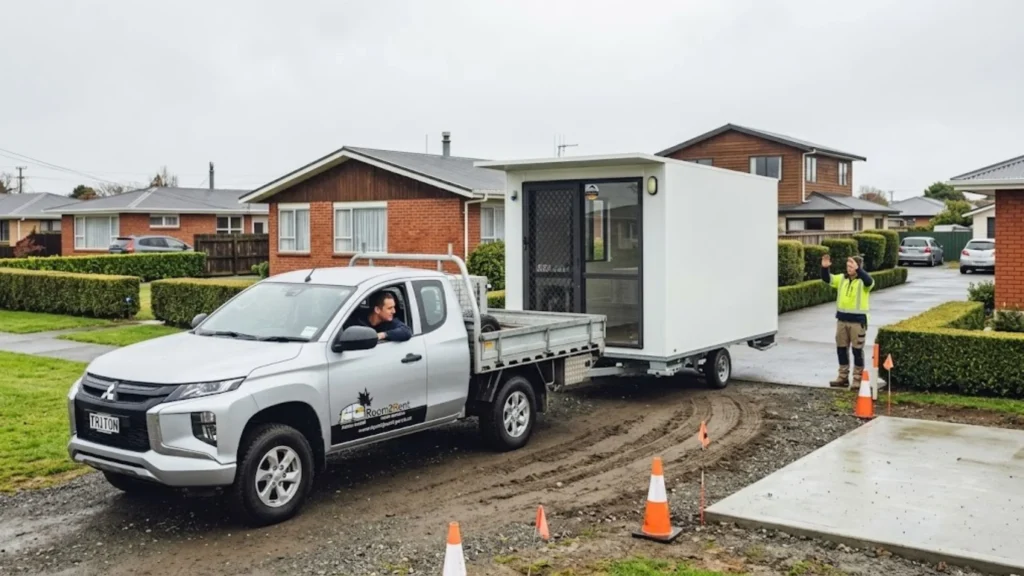
1. Site Access: Can the Cabin Actually Get to You?
Before you fall in love with a spot in the garden, think about how the cabin gets there. Delivery trucks need a reasonably clear, firm path from the street to the final position, and winter rain can turn a grassy driveway into a soft, rutted mess almost overnight.
Walk the route yourself and look for narrow gates, low-hanging branches, retaining walls, or soft lawn that might not hold the weight of a truck. If your property has a steep driveway or a tight side access, mention this when you first enquire — a good supplier will ask about site conditions before delivery day, not on it.
It’s also worth checking the final resting spot itself. Slightly sloped or soft ground can be levelled with a bit of preparation, but this is far easier to sort out before the cabin arrives than after. If you’re unsure whether your section is suitable, Room2rent’s team can talk you through what’s needed based on your regional cabin options.
2. Power Supply: Sorting Electricity Before You Need It
A cabin without power is just a nice-looking box. Before delivery, work out where your nearest power point is and whether a standard outdoor-rated extension lead will comfortably reach the cabin’s position. If it won’t, you may need an electrician to install a proper outdoor socket closer to the site.
This matters more in winter because you’re likely running a heater, lighting, and possibly a laptop or small appliance all at once, often for longer stretches of the day. Cheap or overloaded leads are a genuine fire risk, so it’s worth using a proper outdoor extension cord rated for the load, and avoiding daisy-chaining multiple leads together.
If you’re planning to use the cabin as a home office or studio, it’s also worth thinking ahead about how many devices will be plugged in at once. A double power point inside the cabin, fed by a single solid outdoor-rated lead, is usually enough for most setups.
3. Moisture Control: Keeping Damp and Condensation Out
Damp is the quiet enemy of any small structure over winter. Cabins are built to handle New Zealand weather, but where you place one — and how you use it — makes a real difference to how dry it stays inside.
Ground clearance matters. A cabin sitting directly on wet grass or in a low, shaded corner of the section will hold more moisture in the air around it than one placed on slightly raised, well-draining ground. Good airflow underneath and around the cabin helps stop that dampness creeping upward.
Condensation inside the cabin is a separate issue, caused by warm, moist air (from breathing, cooking, or even just a hot shower nearby) meeting cold surfaces. Cracking a window slightly during the day, using the cabin’s ventilation, and avoiding drying wet clothes inside all help keep this under control. If you notice a musty smell or misting on the windows in the morning, that’s your cue to improve airflow rather than ignore it.
4. Heating: Staying Warm Without Overloading the Space
Small spaces heat up quickly, which is genuinely one of the advantages of a cabin in winter — but they also lose heat fast once the heater switches off, especially overnight. Choosing the right heat source matters more than people expect.
A small oil column heater or a panel heater is usually the safest, most efficient option for a cabin-sized space, and both are gentle on your power bill compared with larger appliances. Whatever you choose, make sure it’s rated for the room size and never left running unattended overnight without a timer or thermostat.
Insulation and draught-proofing also play a bigger role than most first-time renters realise. Simple things — a door snake, thick curtains, or a rug on the floor — can noticeably reduce how much heat escapes. If you’re using the cabin as a home office for remote work, a warm, well-insulated setup also means fewer distractions and a more comfortable working day.
5. Delivery Preparation: Getting Ready for Moving Day
Once you’ve sorted access, power, moisture, and heating, the last step is making sure delivery day itself goes smoothly. Clear the path one final time the morning of delivery, move any vehicles, garden furniture, or pets out of the way, and double-check the final position with whoever is coordinating the drop-off.
It’s also worth checking whether your local council has any requirements for placing a temporary structure on your property, particularly if the cabin will be there for several months. Most residential placements are straightforward, but it only takes a few minutes to confirm.
Confirm the delivery date and rough time window with your supplier in advance, especially in winter when weather can occasionally push timings back a day. For a full breakdown of how the process works from booking to setup, it’s worth reading through the delivery and logistics process beforehand so there are no surprises.
Why Getting This Right Matters
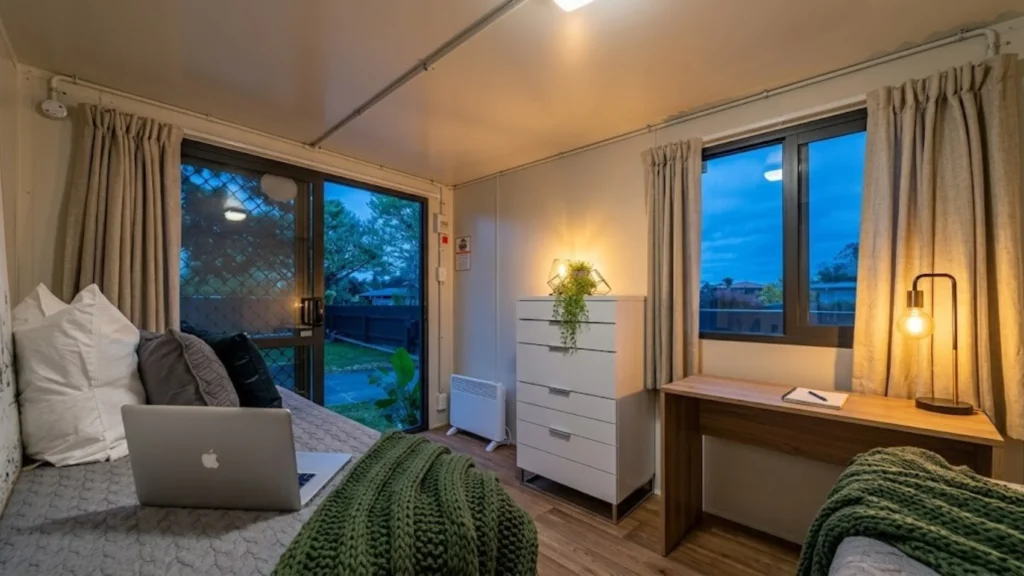
Sorting these five checks before delivery day isn’t just about avoiding hassle — it genuinely changes how much you enjoy the cabin once it’s set up. A well-placed, well-powered, dry, and warm cabin becomes somewhere you actually want to spend time, whether that’s working, sleeping, or simply having your own quiet space.
Room2rent’s cabins are built with New Zealand winters in mind, and the team can talk you through site suitability, power needs, and setup before you commit to anything. Whether you’re after a Standard Cabin for a compact sleepout or an Extra Large Cabin with room to spread out, getting the groundwork right from the start means fewer surprises later.
Ready to Book Your Winter Cabin?
If you’re comparing cabins for rent in Palmerston North this winter, the smartest first step is a quick conversation about your section, your power setup, and what you’ll be using the cabin for. Room2rent’s team can help you work out the right size and placement before delivery day, so you’re not troubleshooting once it’s already on site.
Get in touch with Room2rent today to check availability and talk through your site — or browse the full range of cabins to find the right fit for your winter.
A Warmer, Drier Winter Starts With Planning
Renting a cabin in Palmerston North over winter doesn’t need to be complicated. Most of the issues people run into — a damp corner, a heater that struggles, a truck that can’t quite fit — come down to a handful of details that are easy to sort out beforehand. Walk your site, plan your power, think about airflow, and choose your heating before delivery day, and you’ll be settling into a warm, comfortable cabin rather than fixing problems after the fact.
If you’re still weighing up whether a cabin suits your situation, it’s worth reading about common mistakes renters make so you can avoid them from the outset.
Frequently Asked Questions
No, most cabins can sit on firm, level ground without a concrete pad. A slightly raised, well-draining spot is ideal for winter, as it helps prevent moisture building up underneath and around the base of the cabin.
A single outdoor-rated power point is usually enough for lighting, a heater, and small devices. If you’re running several appliances at once, ask an electrician about installing a dedicated outdoor socket near the cabin site.
Not if it’s placed and ventilated properly. Keeping the cabin off wet ground, allowing airflow underneath, and cracking a window occasionally will keep condensation and damp to a minimum through the colder months.
A panel or oil column heater sized for the room works well and is gentle on power bills. Pair it with draught-proofing, like a door snake or thick curtains, to help the space retain heat overnight.
In most cases, yes, but it depends on width, gate clearance, and ground firmness. Always mention narrow access or steep driveways when enquiring, so the supplier can plan the delivery properly.
Most short-to-medium-term placements don’t require special approval, but rules vary by council and property. It’s worth a quick check, especially if the cabin will stay for several months.
Delivery is typically completed within a single visit once the site is ready. Confirming access, power, and the exact placement beforehand helps the process run smoothly and on schedule.
A Standard Cabin, at 3.6m by 2.4m, comfortably suits one person with room for a queen bed, a desk, and storage, making it a practical option for a sleepout or small home office.
A little morning condensation is common in cold weather, but persistent misting or a musty smell means airflow needs improving. Small adjustments like ventilation or reduced moisture indoors usually resolve it.
Yes, with reliable power and a suitable heater, a cabin makes a warm, private workspace. Good insulation and draught-proofing help keep the space comfortable throughout the working day.