Top 10 Uses for Portable Cabins at Home or Work
When Your House Suddenly Feels Too Small
You know the feeling. Your laptop lives on the dining table, your teenager wants a door that actually closes, and your visitors keep ending up on the couch. Or maybe you run a vineyard, and your harvest crew arrives in six weeks with nowhere to sleep.
Here’s the honest problem. Building an extension takes months and costs a lot. Moving house costs even more. A rented portable cabin can fix many of these headaches, but it isn’t magic. It’s a small, insulated room, not a full home, and Room2rent asks for a six-month minimum rental. If that suits you, these portable cabin uses could solve your space problem fast.
The most popular portable cabin uses are home offices, guest rooms and housing for rural workers. Room2rent rents three sizes (3.6 m, 4.2 m and 4.8 m long). Each one comes insulated, wired and ready to plug in. Rentals start at six months, and delivery costs $150 to $350. Ring 0508 222 464 to check what’s free near you.
Key Takeaways
- Portable cabin uses fall into three groups: work, home life, and rural or regional needs.
- Room2rent rents three sizes: Standard (3.6 m), Large (4.2 m) and Extra Large (4.8 m).
- Every cabin comes insulated, wired and safety checked, so you can plug in and start.
- Rentals start at six months, and delivery costs $150 to $350.
- Your council may still have rules about where the cabin goes, so check before delivery.
- Pick the job first, then the size. Call 0508 222 464 to get started.
What Is a Portable Cabin, and Who Uses One?
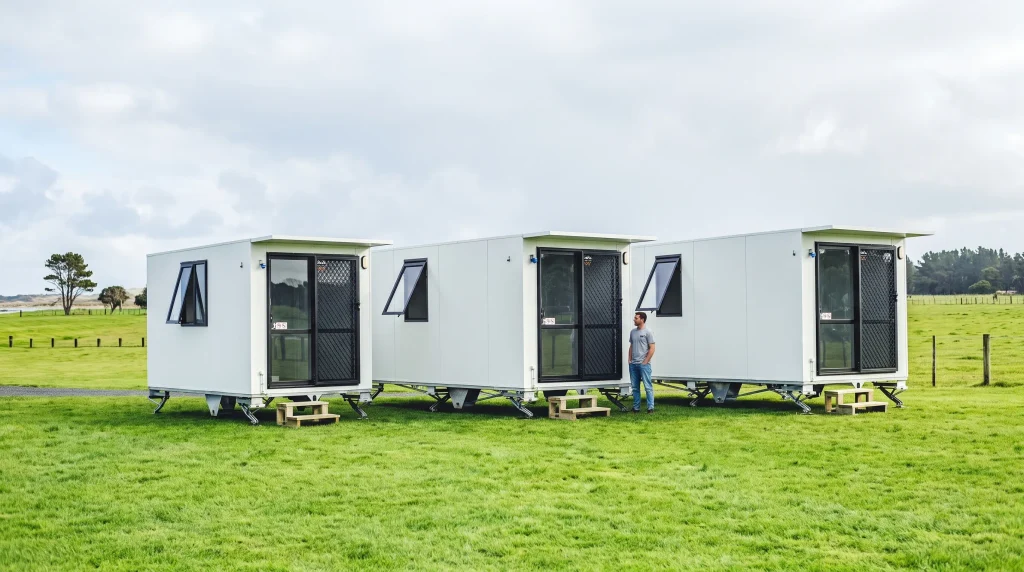
A portable cabin is a small building that arrives by truck and sits on your land, ready to use. Every Room2rent cabin comes with full insulation, two double power outlets, LED lights inside and out, a smoke detector and an outdoor security light. There’s also an RCD switchboard, a certified electrical safety certificate and a 20-metre power cord that fits a normal three-pin socket. You plug it in, and you’re away. Our power setup guide explains how.
People use portable cabins in three main ways. Work uses cover offices, studios and small business bases. Home life uses cover guest rooms, teen spaces and family living. Rural and regional uses cover crew housing, short stays and lifestyle-block extras. The ten ideas below sit across all three groups.
Room2rent has three sizes to pick from. All of them are 2.4 m wide and 2.4 m high, so the length is what changes.
| Cabin | Length | Floor area (approx.) | What fits inside | Best for |
| Standard | 3.6 m | 8.6 m² | Queen bed, desk and drawers | One-person office, beauty studio, small sleepout |
| Large | 4.2 m | 10.1 m² | King or queen bed, plus a desk or sitting area | Couples, teens, hobby rooms |
| Extra Large | 4.8 m | 11.5 m² | Queen bed, two singles and drawers | Crew housing, multi-desk offices |
You can compare every size on the Room2rent cabins page read our size comparison guide, or see how to choose the right cabin. All three sit well under 30 m², which helps with council rules. We cover that in the FAQs below and in our council consent guide.
What Can You Use a Portable Cabin For?
You can use a portable cabin as a home office, a guest room or sleepout, or housing for rural workers such as vineyard and orchard crews. Those are the three big groups, and you’ll find all 10 portable cabin uses in the list below.
10 Portable Cabin Uses Worth Considering
1. Home Office or Remote Workspace
A cabin gives you a proper office without leaving your property. You walk a few steps, shut the door, and you’re at work. A Standard cabin fits a desk, a chair and a set of drawers, and the insulation keeps you comfortable all year. The door locks, so your laptop and paperwork stay safe. This is a good fit if you live in Hamilton and Waikato or Greater Wellington and want a clear line between work and home. Our guide to the best portable home offices in NZ shows how it works, and the home office cabin setup guide helps with desks, lighting and power. To keep work and home apart, read about work-life separation, and check the internet setup guide so your Wi-Fi reaches the cabin.
2. Guest Room or Sleepout
A cabin gives your visitors a bed and gives you your couch back. A Large cabin takes a king or queen bed and still leaves room for a small chair or desk. Your guests get privacy, and your house stays calm. Because the cabin doesn’t have a kitchen or bathroom, it works best close to the back door, so guests can use the facilities in your house. Read more in our guide to renting a sleepout, see how quick guest accommodation works, or compare sleepout rentals for teens, guests and home offices.
3. Housing for Vineyard, Orchard and Farm Workers
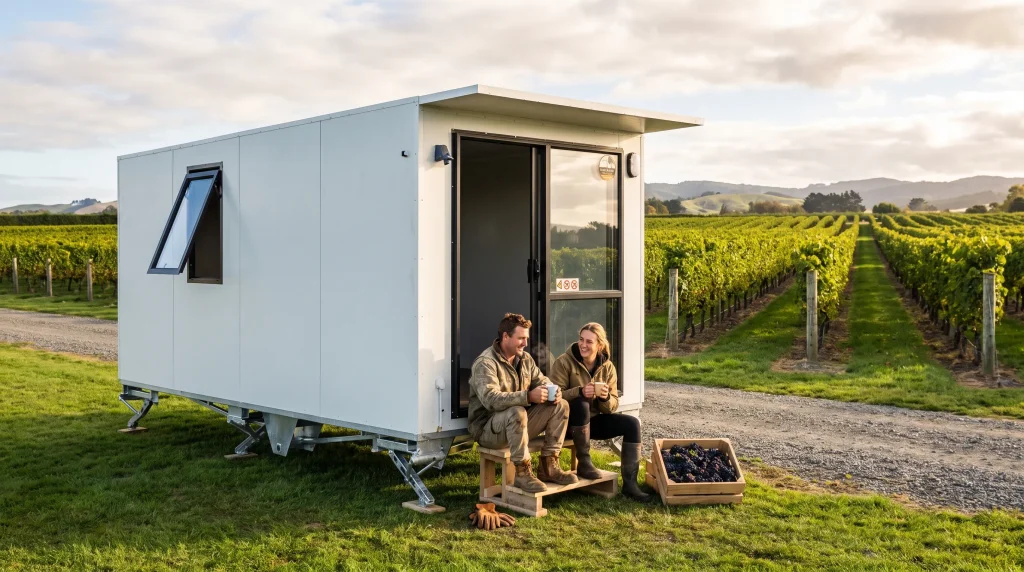
Harvest doesn’t wait for builders. In Nelson, Tasman and Marlborough, vineyard and orchard crews need a bed close to the rows, and growers in Hawke’s Bay face the same rush at harvest and pruning time. An Extra Large cabin holds a queen bed and two singles, so a small crew can share one. The six-month minimum rental suits a long growing season, and the cabins are built to be moved, so you can talk to us if your needs change. Check your worker accommodation and council rules before you order. Our guides to rural worker cabins in Nelson and Marlborough, Hawke’s Bay winter workers, seasonal worker housing and vineyard accommodation in Blenheim and Marlborough cover the details.
4. Short-Term Housing When Life Changes
Sometimes you just need somewhere to stay while something else gets sorted. Maybe a renovation has pushed you out of your main bedroom, a family member needs a place for a few months, or rentals are hard to find in your town. In places like Picton and Marlborough, that last problem is real. A cabin can bridge the gap without a big building project. Have a look at our posts on the Marlborough rental shortage, short-term life changes and renting a cabin instead of moving house. You can also see how temporary housing cabins compare with short-term rentals and read about short-term housing in Picton. If you need help with costs, Room2rent is WINZ approved and can help eligible clients apply.
5. Teen Hideaway or Study Pod
Teenagers want freedom, and you want peace. A backyard cabin gives your teen a door to close, a desk for homework and a spot to hang out with friends, all within sight of the kitchen window. It also works as a quiet study room for younger kids or for families who homeschool. A Large cabin has space for a bed and a desk. Our post on adding privacy without a renovation has more ideas, and so does our post on extra family space.
6. Hobby Room or Creative Studio
Your creativity needs a place where projects can stay out overnight. If you paint, sew, make music or do pottery, a cabin lets you leave everything set up and ready. There’s no packing away after every session. You can add shelves and worktables, but ask us before you fix anything to the walls. Take a look at how to turn a portable cabin into a hobby workshop, browse more creative ideas for portable cabins, or pick up styling ideas for your cabin.
7. Small Business or Side-Hustle Base
If your side gig has outgrown the spare room, a cabin gives you a business base without a commercial lease. A Standard cabin suits a beauty or nail studio, a tutor or a consultant. An Extra Large cabin can hold several desks, which helps if you have staff. These Extra Large cabin layout tips show how to plan the space. Ask your accountant whether the rent counts as a business expense. Our post on launching a small business from a backyard cabin and the portable office hire page will get you started.
8. Wellness Room or Home Gym
You don’t need a gym membership to keep moving. Put a mat, a shelf for your weights and a small speaker in a cabin, and you’ve got a private space for yoga, pilates or meditation. There are no queues and no travel time. Insulation keeps the room comfortable when it’s cold outside, so winter mornings are less of a struggle. You can read more about the insulation in our cabins. For tight floor plans, see the best layouts for small spaces.
9. Visitor Stays and Extra Income
Some people use a cabin to host paying guests, especially in busy visitor areas like Rotorua and the Bay of Plenty. Be careful here, though. Some councils treat paid guest stays differently from a private sleepout, and some have short-term rental rules. Tell your council what you plan to do, and talk to us before you rent. Our portable cabin Airbnb guide explains what to check, and you can also read about visitor accommodation in Picton.
10. Whānau or Multi-Generational Space
A cabin lets three generations live close without living on top of each other. Grandparents, adult children or a family member who needs care can have their own door and their own routine, just steps from the main house. It’s a calm way to keep whānau together. Families in Rotorua often look at this idea, so see our post on multi-generational cabins in Rotorua for inspiration. If you’re downsizing, our empty-nester guide may help too.
Where Each Portable Cabin Use Fits Best in New Zealand
Your region changes which uses make the most sense. Here’s a quick guide to the places Room2rent covers most often in this article.
| Region | Uses that suit the area | Learn more |
| Nelson, Marlborough and Picton | Vineyard and orchard crew housing, short-term housing where rentals are tight | Nelson and Marlborough cabins, Nelson and Tasman lifestyle |
| Hawke’s Bay | Harvest and winter crew housing, family space | Hawke’s Bay cabins |
| Hamilton and Waikato | Home offices, extra family space on lifestyle blocks | Waikato and Hamilton cabins, top uses in Hamilton and Waikato |
| Rotorua and Bay of Plenty | Multi-generational living, visitor stays | Rotorua and Bay of Plenty cabins, flexible cabin rentals in Rotorua |
| Greater Wellington | Home offices and guest space on compact, windy sections | Greater Wellington cabins, compact sections guide |
Where Room2rent Delivers Portable Cabins
Room2rent delivers across much of the North Island and the top of the South Island, and local teams look after each area. Whatever your use, you can find your region below and check what’s available near you.
Not sure which region you’re in? See the full regions page or ring 0508 222 464.
Key Benefits of Renting a Portable Cabin
Renting works well because you skip the big building bill, as our guides on renting versus buying and cabins versus home extensions explain. Here’s what you get.
| Benefit | What it means for you |
| Quick set-up | Most cabins are delivered and set up in a matter of days |
| No building work | No builders, no long waits and no big upfront bill |
| Comfort built in | Full insulation and LED lighting, plus power outlets for winter heating |
| Safety checked | RCD switchboard, certified electrical safety certificate and smoke detector |
| Real local help | A real person gives you advice, and local teams handle delivery |
How Renting Your Cabin Works
Renting a cabin takes three steps. First, the team checks your spot, either on Google Maps or with a free visit. Second, they deliver the cabin, set it up and make sure it’s safe. Third, you move in and make it your own. The minimum rental is six months, depending on availability and region. Delivery costs between $150 and $350, depending on access and location. The security deposit changes with cabin size, and you pay the first week’s rent before move-in. See the booking guide and the pricing guide for more detail. You can also read about what happens on delivery day and the common renting mistakes to avoid.
Ready to Give Your Space a Job?
Start with the job you need done, and we’ll help you choose the size. Call 0508 222 464 or send us a message to check availability and get a quote for your area. You can also browse the photo gallery for real setups, or check the full list of regions to see if we deliver near you. Prefer to read a little more first? Our FAQs page answers the most common questions.
Pick the Job First, Then the Cabin
A portable cabin is one of the simplest ways to add useful space to your home, farm or business. Whether you need a quiet office in Hamilton, a guest room in Wellington, a family space in Rotorua or a bed for your harvest crew in Marlborough, the right size makes all the difference. Think about what you need the space to do, then match it to a Standard, Large or Extra Large cabin. Want more inspiration first? Have a look at these unexpected uses for portable cabins or see how portable cabins suit every lifestyle. When you’re ready, Room2rent Mobile Cabins is here to help you find the right fit and get it delivered.
Frequently Asked Questions
You can use a portable cabin as a home office, guest room, sleepout, teen hideaway, hobby studio, small business base or wellness room. In rural areas, growers use them to house vineyard, orchard and farm crews. Some people also use them for short-term housing, visitor stays or a private space for whānau. Room2rent cabins come insulated and wired, so most uses need very little setup.
Yes. A portable cabin makes a quiet, separate home office just outside your back door. A Room2rent Standard cabin (3.6 m long) fits a desk, chair and drawers. It is insulated, has two double power outlets and LED lighting, and the door locks. If you need space for two or more desks, the Extra Large cabin (4.8 m long) gives you far more room to spread out and work. Both sizes come ready to plug in.
Often not, but it depends on the cabin and where you put it. Cabins under 30 m² with no kitchen or bathroom are usually exempt from building consent. Your council’s district plan can still apply, including boundary and site coverage rules. All Room2rent cabins are under 30 m². Always call your local council before delivery, and ask them to confirm their answer in writing. It only takes a quick call.
Weekly rent depends on the cabin size and your region, so ask for a quote. Delivery costs $150 to $350, depending on access and location. You also pay a security deposit that changes with cabin size, plus the first week’s rent before move-in. The minimum rental period is six months, depending on availability and region. Room2rent is WINZ approved and can help eligible clients apply.
Room2rent can deliver and set up most cabins within a matter of days. The exact time depends on your region, the cabin size and how easy it is to reach your site. First, the team checks your spot using Google Maps or a free visit. Then they deliver the cabin, connect it and check that everything is safe to use. Once that is done, you can move in straight away. Ask the team for a date that suits you.
Pick the size by the job. The Standard cabin (3.6 m) suits one person, like a home office or beauty studio. The Large cabin (4.2 m) fits a king or queen bed plus a small desk or seating area. The Extra Large cabin (4.8 m) holds a queen bed and two singles, or several desks. All three are 2.4 m wide and 2.4 m high, so only the length changes between sizes. Not sure? The team can help you choose.
Yes. Room2rent cabins have full thermal insulation, which keeps the space warmer in winter and cooler in summer. They also have power outlets, so you can plug in a heater for extra warmth. If you live somewhere cold or windy, such as Taupō or the Wellington coast, tell the team. They check your site first and can suggest the best spot for the cabin on your property. That way it stays cosy all year.
Yes. Growers in Nelson, Marlborough and Hawke’s Bay rent cabins to house harvest, pruning and farm crews close to the work. An Extra Large cabin fits a queen bed and two singles. Cabins arrive insulated, wired and ready to plug in. The minimum rental is six months, which suits a long season. Check worker accommodation rules and council requirements before you place an order. Ask us about your crew size.
Room2rent delivers across much of the North Island and the top of the South Island. That covers Auckland, Waikato, Bay of Plenty, Hawke’s Bay, Taranaki, Taupō, Whanganui, Manawatū, Horowhenua, Wairarapa, Kāpiti Coast, Wellington, and Nelson to Marlborough. Local teams handle delivery and set-up. Check the regions page or call 0508 222 464 to confirm cabins are free near you. Not on the list? Just ask.
Sometimes, but check first. Some councils treat paid guest stays differently from a private sleepout, and some have short-term rental rules. Tell your council what you plan to do, not just the size of the cabin. Talk to Room2rent about your plans before you rent one, too. That way you know the rules before you spend any money, sign any agreement or take any bookings. Ask early to avoid surprises.