Stop Damp in Portable Cabins: Ventilation & Moisture Control Tips That Actually Work
Why Your Cabin Feels Damp (And Why It’s Not Your Fault)
If you’ve noticed a musty smell, foggy windows, or a cold, clammy feeling inside your portable cabin, you’re not imagining things — and you’re not alone. Damp is one of the most common complaints among cabin owners, and it has nothing to do with poor housekeeping. It’s simply what happens when moist air gets trapped in a small, enclosed space with nowhere to go.
The good news? Damp is almost always preventable once you understand why it happens and what to do about it. This guide walks you through the causes, the warning signs, and the practical ventilation and moisture control habits that keep your cabin warm, dry, and comfortable all year round.
Damp builds up in portable cabins because small spaces trap moisture from breathing, cooking, and weather changes faster than they can release it. You can stop it by opening windows daily for cross-ventilation, using extractor fans or trickle vents, keeping a small dehumidifier running, heating the space gently and consistently, and leaving gaps around furniture so air can move freely. A well-insulated, properly built cabin, like those from Room2rent Mobile Cabins, makes all of this far easier to manage.
Key Takeaways
- Damp forms when everyday moisture, from breathing, cooking, and showering, has nowhere to escape in a small space.
- Cross-ventilate for ten to fifteen minutes daily, ideally after activities that create steam.
- Extractor fans and trickle vents manage humidity quietly, even when you’re not around.
- A small dehumidifier or moisture absorber actively pulls excess water from the air.
- Keep heating gentle and consistent rather than letting the cabin go cold and reheating it.
- Leave gaps between furniture and walls so air can circulate properly.
- A well-insulated, quality-built cabin gives moisture far fewer places to settle in the first place.
What Is Damp, and Why Does It Happen in a Portable Cabin?
Damp is simply moisture that has nowhere to escape. Every time you breathe, boil a kettle, dry washing indoors, or even sleep, you release water vapour into the air. In a large house, that moisture spreads out and slowly disperses. In a compact portable cabin, however, the same amount of moisture has far less space to fill, so it builds up much faster.
Once the air holds more moisture than it can carry, that excess water settles on the coldest surfaces it can find — usually windows, corners, and external walls. Over time, this condensation turns into visible damp patches, black mould spots, or a persistent musty smell. It’s a simple science problem with a simple science solution: get the moist air out and bring fresh, drier air in.
Why Portable Cabins Are More Prone to Damp Than Larger Homes
Limited Airflow in a Compact Space
A cabin’s biggest strength — its compact, efficient footprint — is also why moisture builds up quickly inside it. With less air volume overall, even everyday activities like cooking or drying a towel can noticeably raise humidity levels within minutes. Without a clear path for that moist air to escape, it simply lingers and settles.
Temperature Swings Between Day and Night
Portable cabins, especially those used as sleepouts, home offices, or studios, often sit empty for stretches of time. When temperatures drop overnight and rise again during the day, the air inside cools and warms with them. This constant temperature shift causes condensation to form on windows and walls, particularly if the cabin isn’t heated consistently.
Everyday Habits That Add Moisture Without You Noticing
Simple daily routines quietly add more water vapour to the air than most people realise. Boiling a jug, showering nearby, drying laundry on an indoor rack, or even having a couple of house plants can all tip humidity levels higher inside a small space.
The Early Warning Signs Worth Watching For
Catching damp early makes it far easier to fix. Watch for a musty, earthy smell that lingers even after airing the space out, windows that fog up regularly or stay misted through the day, small black or grey spots forming in corners and along skirting, and a cold, clammy feel to walls or bedding. Peeling paint, a soft or spongy feel to timber surfaces, and rusting metal fittings are later-stage signs that moisture has been sitting for a while and needs prompt attention.
Ventilation Tips to Stop Damp Before It Starts
Cross-Ventilation Is Your First Line of Defence
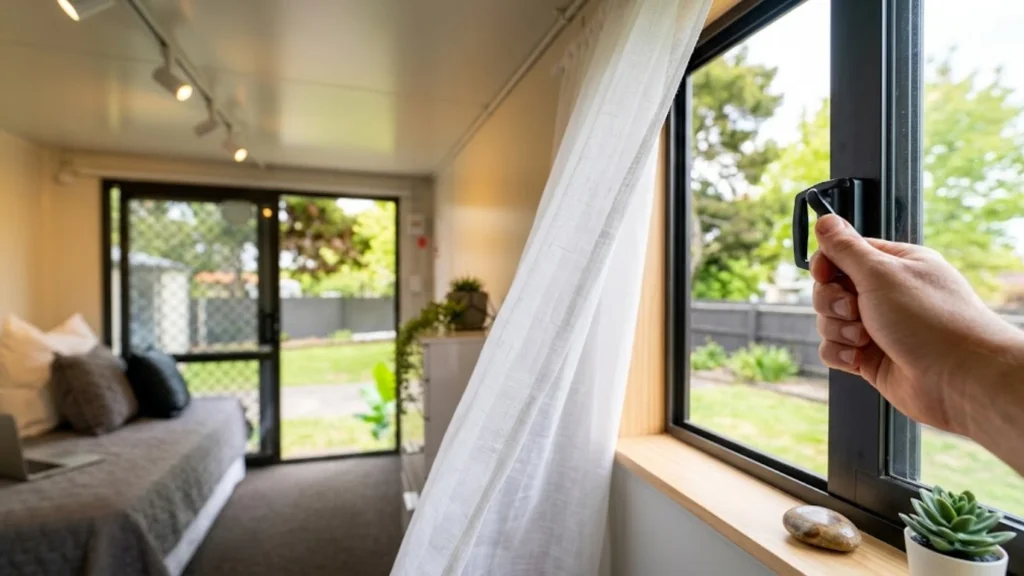
Opening one window lets stale air sit still. Opening windows or vents on opposite sides of the cabin, even briefly, creates a through-breeze that pushes moist air out and pulls fresh air in. Ten to fifteen minutes each morning, ideally after you’ve showered, cooked, or slept in the space overnight, makes a noticeable difference.
Extractor Fans and Trickle Vents Work While You’re Not Watching
Extractor fans and small trickle vents built into window frames quietly manage humidity even when you’re not actively airing the cabin out. They’re especially useful in cabins used as beauty studios, nail studios, or home offices, where equipment, heating, and closed doors can trap moisture throughout the working day.
Time Your Airflow Around Your Routine
Ventilating at the right moments matters more than ventilating for long periods. A short burst of airflow straight after activities that create steam or humidity, such as cooking, showering nearby, or drying towels, clears the moist air before it has a chance to settle on cold surfaces.
Practical Moisture Control Strategies for Everyday Living
Dehumidifiers and Moisture Absorbers
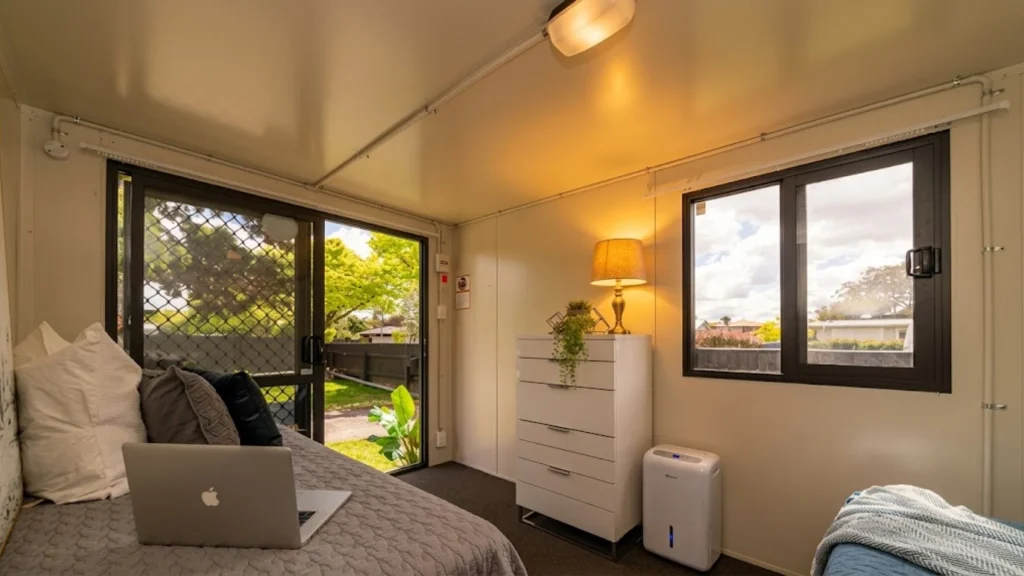
A small, compact dehumidifier is one of the most effective tools for a portable cabin, since it actively pulls excess moisture from the air rather than waiting for it to escape naturally. If you’d rather avoid running an appliance constantly, disposable moisture absorbers placed near windows or in corners offer a low-cost, low-maintenance alternative.
Smart, Consistent Heating Habits
Keeping your cabin at a gentle, steady background temperature, rather than letting it go cold and then blasting the heat, helps prevent the sharp temperature swings that cause condensation. Even a low, consistent setting overnight keeps walls and windows warmer than the surrounding air, which stops moisture from settling on them.
Give Furniture and Belongings Room to Breathe
Pushing furniture flush against external walls blocks airflow and creates cold, still pockets where moisture collects unnoticed. Leaving a small gap, even a few centimetres, between furniture and walls allows air to circulate properly and keeps those hidden damp patches from forming behind beds, desks, and drawers.
Why a Well-Built Cabin Makes Moisture Control So Much Easier
Ventilation habits matter, but they work best when they’re supported by solid construction. A cabin with proper insulation, quality window seals, and thoughtful design gives moisture far fewer places to hide in the first place. This is where the build quality of your cabin genuinely earns its keep.
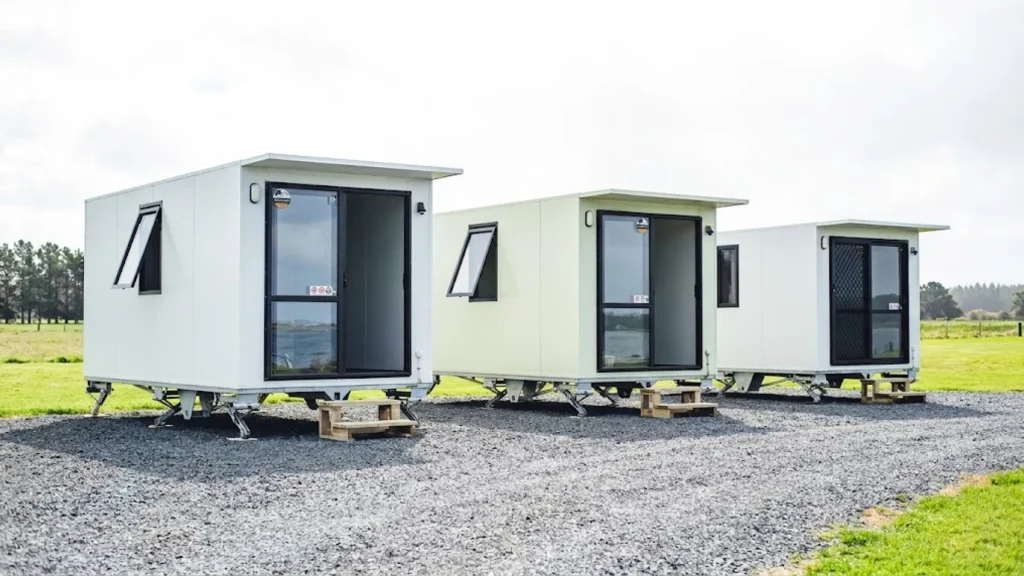
Room2rent Mobile Cabins are designed with this in mind, offering three sizes so you can match the space to how it’s actually used.
| Cabin Type | Size | Best Suited For |
| Standard Cabin | 3.6m x 2.4m x 2.4m | Home office, beauty or nail studio, small sleepout |
| Large Cabin | 4.2m x 2.4m x 2.4m | Couples, singles wanting extra space, shared kids’ room |
| Extra Large Cabin | 4.8m x 2.4m x 2.4m | Multiple staff desks, larger families, flexible living |
Whichever size suits your needs, browse the full range of cabins to compare layouts, or read more about Room2rent and how each cabin is built to handle New Zealand’s changeable weather.
If you’re weighing up a cabin against other options, our guide comparing portable cabins versus home renovations is worth a read, and if you’re setting one up as a workspace, our home office and remote work guide covers the practical side of daily use.
Ready for a Damp-Free Cabin Experience?
You don’t have to accept musty smells, misted windows, or damp patches as part of cabin living. With the right ventilation habits and a cabin built to support them, staying warm, dry, and comfortable is entirely achievable, whatever the season.
If you’re exploring your options, browse available regions, check out common renting mistakes to avoid, or head straight to our FAQs page for quick answers. Ready to talk specifics? Get in touch with our team and we’ll help you find the right fit for your space and lifestyle.
Your Cabin, Dry and Comfortable All Year Round
Damp isn’t something you have to live with, and it certainly isn’t a sign you’re doing something wrong. It’s a simple airflow problem with straightforward, everyday solutions. A few minutes of ventilation, sensible heating habits, and a little breathing room around your furniture go a long way toward keeping your cabin fresh, warm, and healthy.
Pair those habits with a cabin that’s genuinely built for the job, and damp becomes a rare visitor rather than a constant battle. Explore the Room2rent Mobile Cabins range to see which size and setup would suit your space best, or contact the team for friendly, no-pressure advice.
Frequently Asked Questions
Small spaces trap moisture from breathing, cooking, and showering much faster than larger rooms. Without regular airflow, that moisture settles on cold surfaces like windows and walls, turning into visible damp and condensation within days.
Aim for ten to fifteen minutes of cross-ventilation each day, ideally in the morning or straight after activities that create steam, such as cooking or drying towels indoors. Consistency matters more than duration.
Not always, but a compact dehumidifier makes moisture control much easier, especially in winter or in cabins used for sleeping, studios, or offices. Moisture absorbers are a cheaper, lower-maintenance alternative.
Condensation is water forming on cold surfaces when warm, moist air meets them. Left untreated, condensation becomes damp, which can lead to mould, musty smells, and damage to walls, timber, and fabrics over time.
Yes. Trickle vents and extractor fans allow fresh air exchange without letting in the cold, and gentle background heating keeps surfaces warm enough that moisture doesn’t settle on them as easily.
Black mould can affect air quality and may trigger allergies or respiratory irritation for some people. It’s best addressed early with proper cleaning and improved ventilation rather than left to spread.
Smaller cabins can show moisture build-up faster simply because there’s less air volume to absorb it. However, good ventilation habits work effectively across all cabin sizes, from standard to extra-large.
Keep the temperature steady and moderate rather than switching heating on and off. A consistent low setting overnight prevents the sharp temperature drops that cause moisture to condense on windows and walls.
It’s best to leave a small gap, even a few centimetres, between furniture and external walls. This allows air to circulate and stops hidden pockets of damp forming behind beds, desks, and drawers.
Persistent misting on windows, a musty smell that doesn’t clear after airing out, and recurring damp patches in the same spots are all signs your current airflow isn’t enough and needs a closer look.