Fuel Prices Are Rising in 2026 — Here’s How Portable Cabins Keep Kiwis Financially Flexible
The Petrol Pinch Nobody Budgeted For
Have you started timing your supermarket run around which servo has the cheapest litre this week? You’re not alone. Petrol and diesel prices in New Zealand have been climbing through 2026, and every trip in the car now feels like it costs a little more than it used to.
It isn’t just the tank that hurts. When fuel goes up, the cost of everything that moves — building materials, moving trucks, tradie call-outs — climbs with it. A home extension that once felt affordable suddenly comes with a bigger builder’s quote. A simple move across town turns into an expensive exercise once you add truck hire and fuel surcharges.
Fuel prices are a live, moving target — you can check today’s national average on MBIE’s weekly fuel price monitoring page rather than trusting a number that’s already out of date by the time you read it. What doesn’t move is a smarter way to handle rising costs: a portable cabin from Room2rent that turns your backyard into a home office, guest room, or workspace. Cut your commute, skip the building consent process in most cases, and lock in a fixed weekly rental rate while everything else goes up around you.
Key Takeaways
- A backyard cabin used as a home office can remove some or all of your commuting fuel cost, and the savings scale directly with your commute distance and the fuel price on the day.
- Most Room2rent cabins don’t need council building consent, which sidesteps the extra site visits, inspections, and admin trips that add to a renovation’s fuel-linked costs.
- Rental rates are fixed and predictable, unlike fuel, which changes weekly — you can check the current national average any time on MBIE’s page.
- Moving house involves multiple truck trips and fuel surcharges; a cabin delivered to your existing section avoids that cost altogether.
- Delivery to regions including Taranaki, Hawke’s Bay, Nelson, and the Wairarapa is typically measured in days, not months.
How Rising Fuel Prices Are Reshaping Kiwi Households
This article walks through exactly how rising fuel costs are reshaping decisions about space, work, and moving house across New Zealand — and shows you a real, calculable way a portable cabin can offset those costs, using your own commute distance and a live fuel price link rather than a made-up number. You’ll find a simple savings model you can apply to your own situation, a look at where the extra costs are hiding in traditional renovations and removals, and answers to the questions Kiwis are asking most about renting a cabin in a high-fuel-price year.

The Domino Effect: How Fuel Costs Ripple Into Your Living Space
It’s tempting to think rising fuel prices only affect your car. In reality, they touch almost every decision tied to where and how you live.
Your commute is the most obvious hit. If cheaper rent means living further from work, any money you save on housing gets eaten up by extra fuel every single week. Construction costs follow the same pattern: timber, concrete, and steel all have to be trucked to site, and every increase in diesel prices flows straight into your builder’s quote. Even a straightforward local move gets pricier, because moving companies pass fuel surcharges on to the customer.
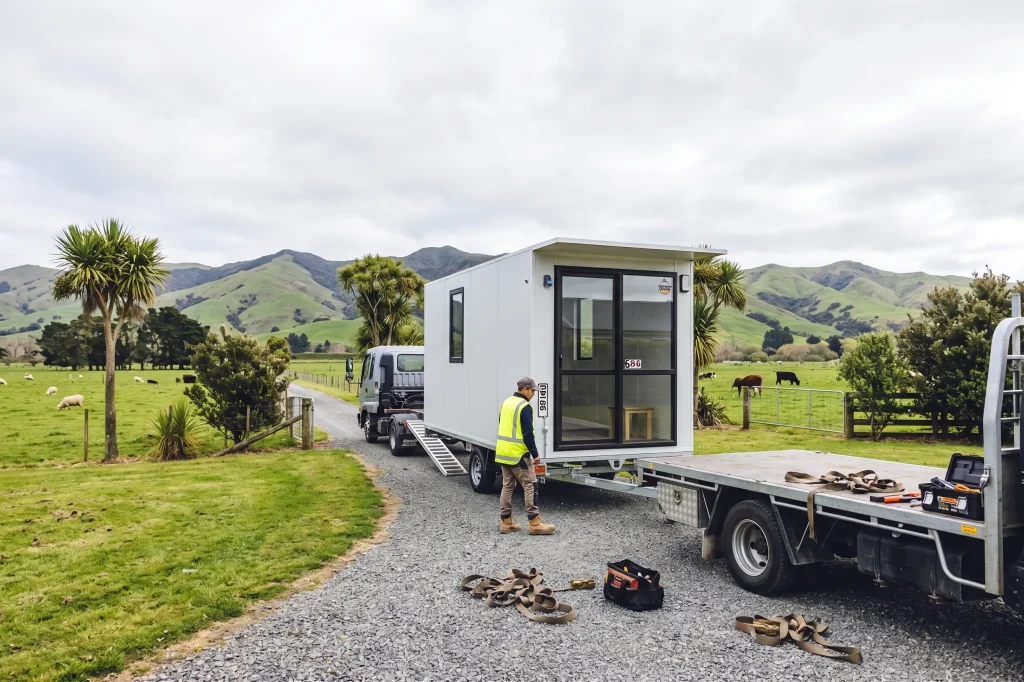
A portable cabin rental sidesteps this whole chain. Instead of moving your life to a cheaper suburb or paying for a permanent extension, you bring the extra room to the section you already have.
Can a Portable Cabin Actually Save You Money on Fuel?
Answer block: A backyard cabin used as a home office can eliminate the average commute cost entirely, which for many Kiwis working three or more days from home adds up to hundreds of dollars a month. The savings scale with your commute distance and the current fuel price — the further you normally drive, and the higher the pump price, the more a cabin office pays for itself.
Here’s how to work it out for yourself, using figures anyone can check. New Zealand’s national average light-vehicle fuel use sits around 8 litres per 100 kilometres for a typical mid-size car, and MBIE publishes the current national average regular petrol price every week — no need to rely on a figure that goes stale.
Weekly commuting fuel cost by distance (based on 8L/100km and a $2.96 per litre reference price, correct as at the week ending 12 July 2026 — always check the live MBIE figure for today’s number):
| One-way commute | Daily round-trip fuel cost | Weekly saving (3 days from a cabin) | Weekly saving (5 days from a cabin) | Monthly saving (5 days) |
| 10 km | $4.74 | $14.21 | $23.68 | ~$102 |
| 20 km | $9.47 | $28.42 | $47.36 | ~$204 |
| 30 km | $14.21 | $42.62 | $71.04 | ~$306 |
Figures updated 4 September 2026. This is an illustrative model — swap in your own vehicle’s fuel use and today’s litre price for a figure that matches your situation exactly.
If you’re driving 20 kilometres each way and working from a home office cabin three days a week, that’s roughly $28 back in your pocket weekly, or well over $1,200 a year, before you even account for parking, wear and tear, or the coffee you buy on the way in.
Why Renting a Cabin Is the Smartest Financial Move in 2026
Flexibility matters more than ever when the cost of living keeps climbing. A portable cabin gives you extra space right now, without locking you into a mortgage-sized decision.
Stop the Commute With a Home Office
If petrol is quietly draining $80 or more from your account every week just to sit at a desk, a dedicated garden workspace changes the maths fast. Setting up a proper work-from-home cabin office means you close the laptop and you’re already home — no fuel bill attached to your working day. Kiwis in West Auckland with smaller urban sections have found this especially useful, since a compact cabin fits where a full renovation never could.
Avoid the Renovation and Consent Trap
A permanent extension is a long-term financial commitment. If fuel prices or interest rates ease in a year or two, you’re still paying off a project sized for today’s problems. A rental cabin, by comparison, is scaled to what you need for as long as you need it — and because most cabin rentals don’t require building consent, you skip the council visits, inspection call-outs, and admin delays that add hidden fuel and time costs to a traditional build. Whether you’re in Waikato, Rotorua, or the Bay of Plenty, a well-insulated room can be on-site in days rather than the months a consented build usually takes.
Save on the Cost of Moving
If your household needs more room because a family member has moved back home, the instinct is to search for a bigger rental. But the bond, the moving trucks, and the jump in weekly rent for an extra bedroom add up fast. Renting a cabin instead of moving house is usually far cheaper — it’s delivered once, set up within an hour or so, and gives you the breathing room without a single removal van in sight.
Real Comfort, Not Just a Shed
One thing that surprises people is how liveable these spaces actually are. Room2rent cabins are properly insulated, so they hold their warmth in winter and stay cool in summer, which also keeps your power bill in check compared with heating an old caravan or an under-insulated back room. Whether you need a cabin for rent in Wellington or a solution around Nelson and Marlborough, local delivery covers the Kāpiti Coast and Horowhenua too, so financial relief is never far away no matter where you’re based.
It’s worth remembering that fuel isn’t the only cost pressure households are juggling right now — power, groceries, and interest rates have all climbed at once. A fixed weekly cabin rental is one of the few household costs you can lock in and forget about, which makes budgeting a little less stressful when almost everything else feels unpredictable. That predictability is often what tips the decision for families weighing up a cabin against a bigger, more expensive change.
What a Cabin Costs Compared With the Alternatives
Weighing up your options usually comes down to one question: what actually saves you money over a year, not just on day one?
| Option | Typical upfront cost | Ongoing cost pressure | Fuel-linked cost exposure |
| Home extension/renovation | High — design, consent, build | Mortgage or loan repayments | High — materials, tradie travel, deliveries |
| Moving to a bigger rental | Bond + moving costs | Higher weekly rent | Moderate — one-off but often repeated |
| Portable cabin rental | Low — fixed weekly rate | Predictable, fixed rental | Low — one delivery, then none |
For a full breakdown of what to expect, our portable cabin pricing guide sets out real rental figures, and our comparison of cabins versus renovations goes into more detail on the long-term numbers.
Take Control of Your Budget Today
Rising fuel prices shouldn’t be the reason you put up with a cramped house, a long commute, or a stressful move. A portable cabin gives you the extra space you need without tying you to a construction loan or a moving van full of fuel surcharges.
Curious how much you could save? Browse the full range of cabins to see what fits your section, or check the financial benefits of long-term cabin hire if you’re weighing this up as a longer commitment. Our team can talk you through flexible terms and fast delivery windows.
Get in touch with your local Room2rent team today for a free, no-obligation quote.
Frequently Asked Questions
Cabin rental rates themselves are largely fixed, but delivery and transport costs can shift slightly as fuel prices move. The good news is a cabin is delivered once, unlike a commute or house move that repeats the fuel cost every day. Ask your provider whether delivery fees are locked in at booking.
Delivery fees are usually calculated by distance from the depot to your site, so a longer trip may cost slightly more when diesel prices rise. Room2rent quotes delivery as part of your upfront price, so there are no surprises once your fuel-linked fee is confirmed and locked in.
Room2rent builds delivery into the total quoted price for most regions, so you know your full cost upfront rather than facing a separate fuel surcharge later. Always confirm with your provider whether delivery and set-up are bundled into the weekly rate before signing.
Prices vary a little by region due to delivery distance and local demand, but a small cabin typically sits in a similar weekly band nationwide. Our pricing guide breaks down real figures by size and region so you can compare accurately.
Room2rent services most of the North and South Island, including Auckland, Waikato, Hawke’s Bay, Wellington, and Nelson-Marlborough, with fixed weekly rates that stay steady even as fuel prices move. Check your regional page for local availability and pricing.
Room2rent offers long-term hire across Auckland, including West Auckland sections, with flexible terms that suit ongoing home office or extra-room needs. Longer terms typically bring a better weekly rate, so it’s worth asking about multi-month options.
Some providers are shifting toward more efficient delivery fleets to manage rising diesel costs, though this varies by company and region. It’s a fair question to ask when getting your quote, since it can affect delivery pricing over time.
Well-insulated cabins with good window seals and effective heating options use far less power to keep comfortable, which matters as electricity costs also climb. Ask about insulation ratings and heating set-up when comparing cabin options for your climate.
The biggest saving comes from using the cabin to avoid your daily commute rather than from the delivery itself. Choosing a provider with a depot close to your region also keeps delivery costs down, and a single delivery beats the repeated cost of driving or moving.
Room2rent covers a wide range of New Zealand regions with quotes tailored to your site and cabin size. Contact the team with your location and requirements for a free, no-obligation quote.