Is a Sleepout Rental Warm Enough for Winter Living in New Zealand?
Will You Freeze in a Sleepout This Winter?
You’ve found the perfect little sleepout. It’s cheaper than renting a spare room, it gives you your own space, and it could be set up in your backyard within days. Then winter crosses your mind, and the doubt creeps in.
Will it actually be warm enough? Or will you be lying awake at 2am, wrapped in three blankets, listening to rain hammer a thin tin roof?
It’s a fair question. New Zealand homes have a well-earned reputation for being cold and damp, and a standalone cabin sounds even more exposed than a proper house. The good news is that the answer isn’t a guess. It comes down to a few specific things: how well the cabin is insulated, how it’s ventilated, what heating option you use, and how well it manages condensation. Get those right, and a sleepout rental can be genuinely cosy, even through a Southland frost or a soggy Auckland July.
A well-built sleepout rental can absolutely be warm enough for winter, provided it has proper wall and ceiling insulation, double glazing or thermal curtains, a safe and appropriately sized heater, and enough airflow to stop condensation building up. A cheap, poorly insulated cabin will struggle. A well-specified one, like those from Room2rent, is built with New Zealand winters in mind from the ground up.
Key Takeaways
- Insulation in the walls, floor, and ceiling is the single biggest factor in winter comfort
- Double glazing or thick thermal curtains cut heat loss through windows significantly
- Controlled ventilation prevents the damp, musty feeling that makes cabins feel colder than they are
- Heat pumps and oil column heaters suit longer winter use; panel heaters suit quick top-ups
- Wiping windows and using a small dehumidifier prevents most condensation problems
- Smaller cabins heat faster and cheaper than full-sized rooms
- A well-specified sleepout, like those from Room2rent, is realistically cosy through a NZ winter
What “Warm Enough” Actually Means in a NZ Winter
Before going further, it helps to describe what you’re really asking. A sleepout doesn’t need to feel like a heated hotel room around the clock. What it needs is to hold heat once you’ve warmed it, keep the cold air outside where it belongs, and avoid the damp, musty feeling that makes older NZ buildings so unpleasant in July and August.
That comes down to four things working together: insulation, ventilation, heating, and moisture control. Miss one of these, and the whole system falls apart, even if the other three are excellent. A beautifully insulated cabin with no airflow will still turn damp. A well-heated cabin with thin walls will just leak that heat straight back outside. So let’s go through each one properly.
Insulation: The Foundation of a Warm Sleepout
Insulation is the single biggest factor in whether a cabin feels warm or freezing. Think of it as a thermos flask for your living space. Good insulation slows down how quickly heat escapes through the walls, floor, and ceiling, so the warmth you generate actually stays inside.
Cheaper, poorly built cabins often skimp here, using thin panelling with little or no insulation batts behind it. That’s exactly why some renters on forums like Reddit describe sleepouts feeling colder than the outdoors. A quality cabin, by contrast, uses insulated wall and ceiling panels rated for New Zealand’s climate, along with an insulated floor to stop cold rising up from the ground, which is one of the most overlooked heat-loss points in any small building.
Windows matter just as much as walls. Double glazing makes a noticeable difference, cutting heat loss through the glass by roughly half compared with a single pane. If a cabin only has single glazing, thick thermal curtains are a simple, affordable way to close the gap.
Compare cabin sizes and specifications on the Room2rent cabin range.
Ventilation: Why Airflow Still Matters When It’s Cold
It sounds backwards, but a sleepout that’s sealed up too tightly can actually become less comfortable, not more. Without any airflow, moisture from breathing, showering nearby, or simply the temperature difference between inside and outside has nowhere to go. It settles on cold surfaces instead.
A well-designed sleepout balances this with controlled ventilation, small trickle vents, extractor fans, or openable windows positioned so you can let stale, moist air out without losing all your heat. The trick is controlled airflow, not draughts. A cabin riddled with gaps around doors and window frames isn’t ventilated, it’s just leaky, and that’s a very different (and much colder) problem.
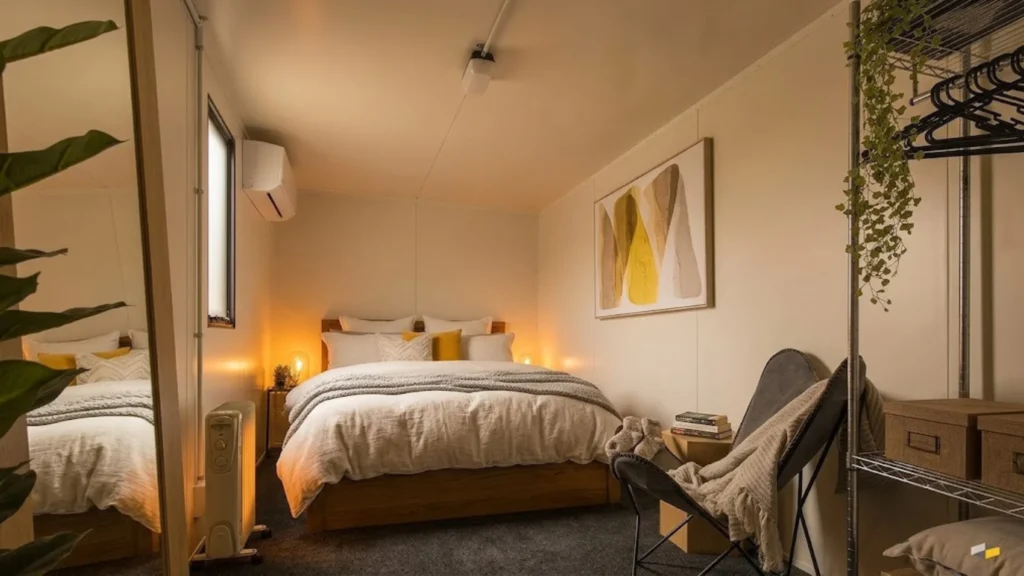
Heating Options That Actually Work in a Small Cabin
Because a sleepout is a compact space, usually between 3.6m and 4.8m long, it doesn’t take much to heat it, which is actually one of the advantages over a full-sized room. The right heater depends on your cabin size, your budget, and whether you want background warmth or a quick blast of heat before bed.
| Heating Option | Best For | Running Cost | Notes |
| Heat pump | Larger cabins, daily use | Low–Medium | Efficient, also cools in summer |
| Oil column heater | Steady overnight warmth | Medium | Safe to leave on low, no fan noise |
| Panel heater | Quick top-ups | Medium | Compact, easy to move around |
| Electric blanket | Extra bedtime comfort | Low | Great paired with any of the above |
A Standard Cabin at 3.6m x 2.4m heats up quickly with even a small panel heater, since there’s simply less air to warm. The Large and Extra Large Cabins, at 4.2m and 4.8m respectively, benefit from a slightly stronger heater or a heat pump if you’re using the space daily through winter. Whatever you choose, make sure it’s rated for the room size and used safely, with clear space around it and never left running unattended overnight unless it’s designed for that purpose.
See which cabin size suits your winter heating needs.
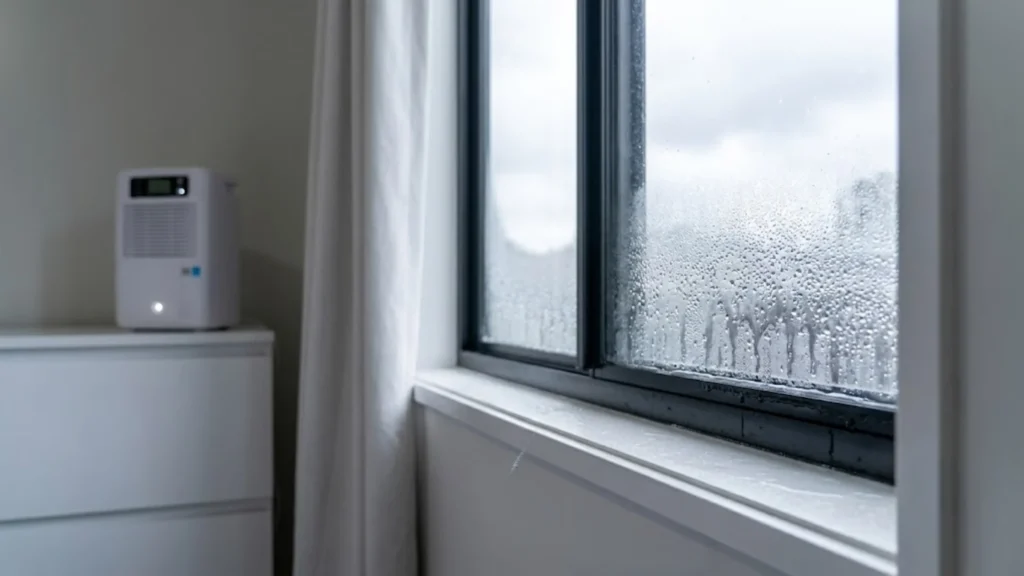
Condensation Prevention: The Detail Most People Forget
Condensation is the quiet culprit behind most “cold sleepout” complaints. It’s not usually that the cabin is too cold, it’s that moisture is building up on windows, in corners, and along the base of walls, making everything feel damp and chilly even when the heater’s on.
A few simple habits make a real difference here. Wiping condensation off windows each morning stops it soaking into frames and sills. Cracking a window slightly while showering or cooking nearby lets moisture escape before it settles. And a small dehumidifier, especially in cabins near coastal or high-rainfall regions, can keep humidity at a comfortable level without much effort or cost. Quality cabins also help by using vapour-resistant linings and proper drainage, so moisture doesn’t get trapped inside wall cavities in the first place.
Read more about setting up a backyard cabin as a private, comfortable space.
Setting Realistic Expectations for Winter Living
It’s worth being honest here, because that’s what builds trust, not marketing spin. A sleepout, even a very good one, is a smaller, standalone structure. It will lose heat faster than a large insulated house with central heating, simply due to its size and the amount of external surface area relative to floor space.
That doesn’t mean it can’t be warm. It means the ceiling should be reasonable: expect to run a heater for a while each evening rather than expecting it to hold 22 degrees all day on its own, especially in the South Island or colder inland regions. Curtains, a good doona, and a rug on the floor all add noticeable comfort for very little cost. Most people who’ve lived in a well-specified sleepout through winter describe it as cosy and manageable, not miserable, provided the insulation and heating were sorted properly before the cold arrived.
Curious about the trade-offs? See portable cabins vs renovations in NZ and cheap portable cabins and winter comfort.
Key Benefits of Renting a Winter-Ready Sleepout
- Faster to heat than a full-sized room, thanks to the compact footprint
- Lower running costs, since there’s less volume to warm
- Flexible sizing, from a Standard Cabin for one person up to an Extra Large Cabin for a couple or small family
- No renovation hassle, unlike retrofitting insulation into an old spare room
- Move it if you need to, which a fixed extension simply can’t offer
Ready to Stay Warm This Winter? Talk to Room2rent
If you’ve read this far, you already know the honest answer: a sleepout rental can absolutely be warm enough for a New Zealand winter, but the specifications matter. Insulation, ventilation, the right heater, and good condensation habits all need to work together.
Room2rent’s mobile cabins are built with these exact winter essentials in mind, not added on as an afterthought. Whether you need a Standard Cabin for a quiet home office or sleepout, a Large Cabin with room to spare, or an Extra Large Cabin for a couple or growing family, there’s a size that fits your space and your budget.
Get in touch with Room2rent to talk through the right cabin and heating setup for your section, or browse the full range of cabins to compare sizes. You can also check cabin availability by region to see what’s ready near you this winter.
Warmth Is a Question of Specification, Not Luck
Whether a sleepout rental keeps you warm this winter isn’t down to chance. It comes down to whether the insulation, ventilation, heating, and moisture control were thought through properly before it ever landed in your backyard. A cheap, thin-walled cabin will disappoint you. A well-built one, sized and heated correctly, will surprise you with how liveable it feels even on the coldest nights.
If you’re weighing up your options for winter, it’s worth comparing cabin sizes and asking direct questions about insulation and glazing before you commit. Room2rent’s team can walk you through exactly what’s included and help you pick the right fit for your section and your budget.
Frequently Asked Questions
Yes, if it’s properly insulated and heated. A well-built sleepout with insulated walls, a good heater, and double glazing or thermal curtains can stay comfortably warm, even on cold winter nights.
Look for insulated wall panels, an insulated ceiling, and an insulated floor. These three areas are where most heat escapes, so covering all of them makes the biggest difference to overall warmth.
A heat pump suits daily winter use best, while an oil column heater gives safe, steady overnight warmth. Panel heaters work well for quick top-ups in smaller Standard Cabins.
Damp usually means condensation, not lack of heat. Moisture builds up on cold surfaces when there’s not enough airflow. Cracking a window briefly or using a small dehumidifier usually solves it.
Yes. Double glazing roughly halves heat loss through windows compared with single glazing, which matters a lot in a small space where windows make up a bigger share of the wall area.
It’s generally cheaper than heating a full room, since there’s less space to warm. Running costs depend on the heater type, but a Standard Cabin typically costs less to heat than a similarly sized bedroom.
Left unchecked, yes, it can lead to mould or damage to window frames over time. Wiping condensation daily and allowing brief ventilation prevents this from becoming a problem.
A Standard Cabin (3.6m x 2.4m) is often the warmest and cheapest to heat for one person, simply because there’s less air volume for your heater to warm up.
With good insulation and heating, a portable cabin can feel just as warm, sometimes warmer, since it’s a smaller, more efficient space to heat than an old, draughty spare room.
Ask about wall, floor, and ceiling insulation, glazing type, and what heating options are included or recommended. These four answers tell you almost everything about winter comfort.