Winter-Proof Your Portable Cabin: Best Heating Options for Cold NZ Nights
The 7pm Chill
You get home, open the cabin door, and it hits you straight away — that flat, cold air that no jumper quite fixes. You flick the heater on, wait twenty minutes, and by the time it’s warm enough to take your coat off, it’s nearly bedtime. That’s not bad luck. It’s a heating mismatch, and it’s the single biggest complaint from portable cabin owners once the southerlies roll in.
A small NZ cabin heats fastest and cheapest with a right-sized heat pump for daily use, or a thermostat-controlled panel or oil column heater if you’re renting power or only heating occasionally. Insulation does half the work before the heater even switches on — without it, you’re paying to warm the outdoors. Match your heater to the cabin size (Standard, Large or Extra Large), use a timer so it’s warm before you walk in, and avoid unflued gas heaters, which trap moisture in a small, sealed space.
Key Takeaways
- Heat pumps cost the least to run for daily use, but need a proper installation.
- Panel and oil column heaters suit renters, occasional use, or bedroom-style cabins.
- Fan heaters are good for a quick top-up, not all-night heating.
- Avoid unflued gas heaters — they’re costly to run and add moisture to a small space.
- Size your heater to the room (roughly 100W per m²) and use a thermostat and timer.
- Insulation matters more than the heater itself — it decides how much heat you actually keep.
What Actually Keeps a Cabin Warm
A portable cabin holds heat differently to a full-sized house, and that changes which heater actually works. Because the space is smaller, it heats up faster than a house room — but it also loses heat faster if the insulation, sealing, or heater choice is wrong. Bulk insulation in the walls, ceiling and underfloor, along with double glazing rather than single-glazed windows, is what stops heat escaping in the first place.
Once that groundwork is sorted, the heater you choose is really about how you use the space. A home office you sit in for eight hours a day has different needs to a sleepout you only warm up before bed. Below, we’ll walk through the main heating options for a Kiwi winter, what each one costs to run, and which setup suits which type of cabin.
Heat Pumps: The Workhorse for Everyday Use
If you’re in your cabin most of the day — running it as a home office, studio, or full-time sleepout — a heat pump is worth the upfront cost. For an average New Zealand household, a heat pump costs $122 less a year to run than piped gas heating, and $352 less than bottled LPG. That gap gets even more noticeable in a small, well-insulated cabin, because the unit isn’t fighting a huge volume of air.
A typical heat pump costs roughly 12 to 18 cents per hour to run, and because it moves warm air rather than generating it from scratch, it reaches a comfortable temperature far quicker than a plug-in heater. The trade-off is installation — you’ll need a qualified installer and a wall or window suited to an outdoor unit, which is worth checking before you commit if your cabin sits on a rented site.
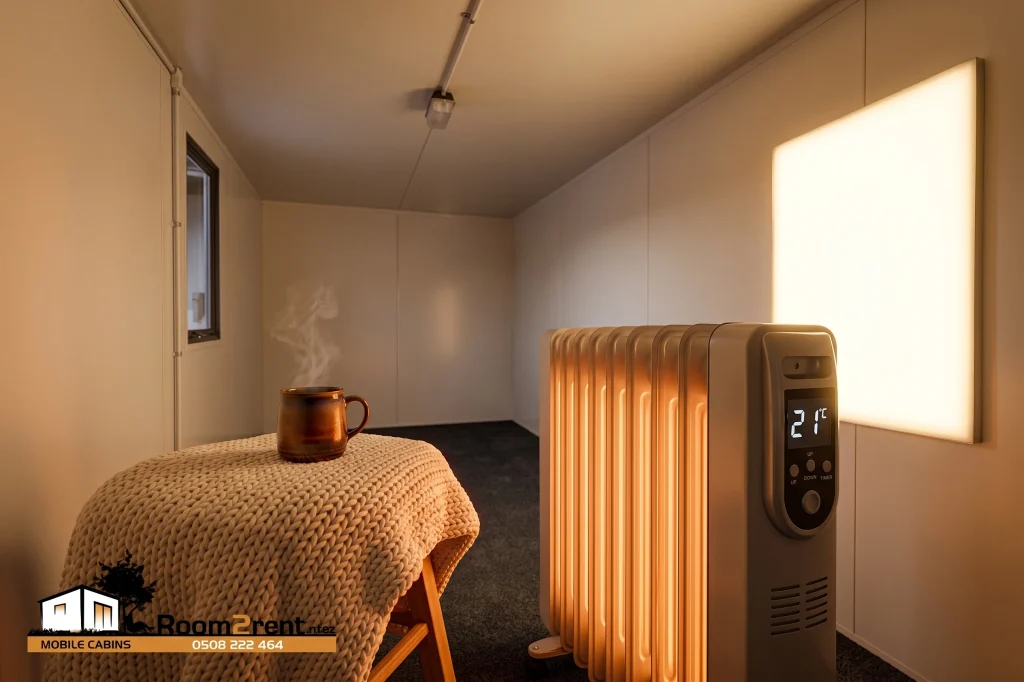
Panel and Oil Column Heaters: Best for Renters and Occasional Use
Not every cabin owner wants to install fixed equipment, especially if you’re renting rather than buying, or moving the cabin between sites. This is where portable electric heating earns its keep.
A panel heater or oil column heater delivers the best combination of warmth, safety, and running cost control for most small rooms in New Zealand. Panel heaters work well if you want quiet, steady background warmth without a fan noise — ideal for a bedroom-style Standard Cabin. Oil column heaters take a little longer to warm up but hold onto that heat once switched off, which suits a Large or Extra Large Cabin used for several hours at a stretch.
For overnight use, look for a heater with a thermostat, timer, tip-over protection, and a cool-touch exterior as a minimum — non-negotiable in a compact space where the heater sits closer to furniture and bedding than it would in a full-sized room.
Fan Heaters: Fast Heat, Short Bursts
If you only need warmth for ten minutes while you get dressed or wait for the room to feel liveable, a fan heater is hard to beat. Fan heaters heat faster than any other portable option but offer no residual warmth once switched off, so they’re better as a top-up than your main heat source. Pair one with a panel heater — fan for the quick blast, panel for the steady background warmth — and you cover both ends of the day without overpaying on power.
What to Avoid: Unflued Gas and Undersized Units
Two mistakes come up again and again with cabin heating. The first is unflued gas heaters, sometimes called cabinet heaters. These tend to be the most expensive type of heating to run, and in a small, sealed cabin they also release moisture directly into the air — exactly what you don’t want when condensation and damp are already harder to manage in a compact space.
The second mistake is buying a heater that’s too small for the room and running it flat out all night. Size your heater at roughly 100 watts per square metre as a starting point, stepping up if the room has poor insulation. An undersized heater never quite reaches a comfortable temperature, so it runs constantly — costing you more than a correctly sized unit that reaches its target and cycles off.
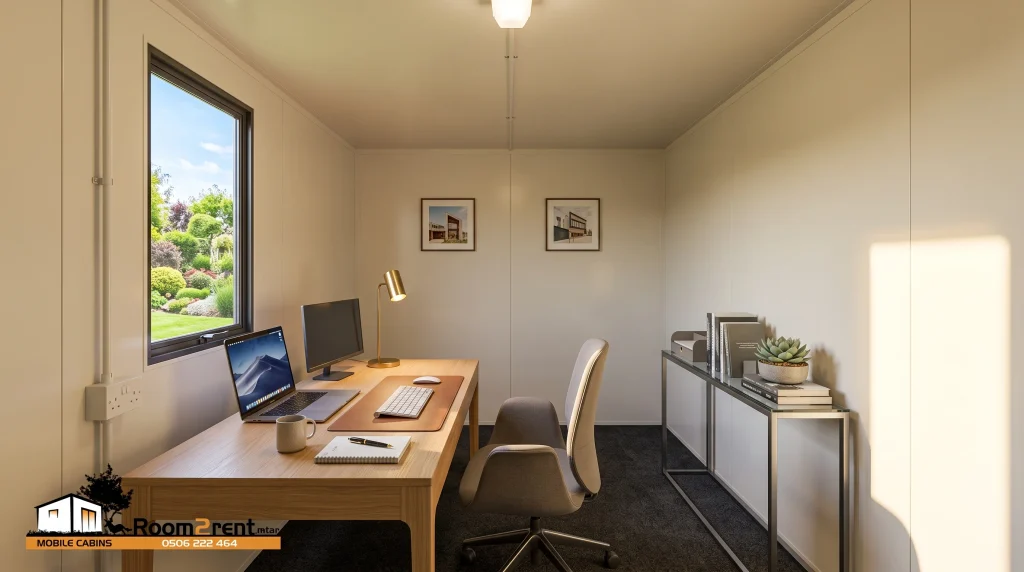
Matching the Heater to Your Cabin Size
| Cabin Type | Approx. Floor Area | Suggested Heating |
| Standard Cabin (3.6m x 2.4m) | ~8.6m² | Panel heater with thermostat, or fan heater for quick top-ups |
| Large Cabin (4.2m x 2.4m) | ~10m² | Oil column heater or entry-level heat pump for all-day use |
| Extra Large Cabin (4.8m x 2.4m) | ~11.5m² | Heat pump recommended if used daily; panel heater as backup |
A Standard Cabin set up as a nail studio or beauty room, for example, only needs warmth during working hours, so a thermostat-controlled panel heater on a timer is usually enough. An Extra Large Cabin housing two staff desks, on the other hand, is occupied all day — that’s where a heat pump starts to pay for itself.
Insulation Does Half the Job Before the Heater Turns On
None of the above matters much if the heat you’re paying for leaks straight back out. Good insulation in the walls, roof and floor keeps warmth in during winter, cuts your power bill, stops damp and condensation, and makes a small space feel liveable rather than just survivable. Every Room2Rent cabin is built with this as standard, so you’re not retrofitting insulation into a cold shell — the groundwork is already in place before the heater even goes in.
If you’re comparing a cheaper cabin option against a fully insulated one, it’s worth reading how much insulation actually affects winter comfort before you decide, because the heating bill difference over a season can outweigh the upfront saving.
Key Benefits of Getting Cabin Heating Right
Sorting out heating properly, rather than just reaching for whatever heater’s in the shed, pays off in a few clear ways. You’ll spend less on power because a right-sized heater reaches temperature and holds it, instead of running flat out all evening. You’ll avoid the damp, musty smell that builds up in a sealed space with the wrong heater. And you’ll actually use the cabin the way you meant to — as a proper home office, sleepout or studio, not a room you avoid after 6pm in July.
Ready for Winter?
If you’re weighing up a portable cabin for winter and want to know which size and setup suits how you’ll use it, get in touch with the Room2Rent team. We can talk through your site, your power setup, and which cabin — Standard, Large or Extra Large — fits your heating plan best. You can also browse the full range of cabins or check our FAQs for common questions about renting, delivery and setup.
Staying Warm All Season
Winter-proofing a portable cabin isn’t about buying the biggest heater you can find. It’s about matching the right heat source to how you actually use the space, and making sure the insulation is doing its job before the heater even switches on. Get that combination right, and a Room2Rent cabin stays genuinely comfortable from the first frost through to spring — not just heated, but liveable. If you’re still deciding whether a sleepout is warm enough for a New Zealand winter, that’s exactly the question this guide was written to answer.
Frequently Asked Questions
A right-sized panel heater on a thermostat is the cheapest upfront option, while a heat pump is cheapest to run long-term if you’re heating the cabin daily. Combine either with good insulation, since heat loss through walls and windows is usually the bigger cost driver than the heater itself.
Yes, most portable cabins can take a wall-mounted heat pump, provided there’s a suitable exterior wall for the outdoor unit and access to power. It’s worth checking with your installer and cabin provider before delivery if you’re planning ahead.
A well-insulated cabin with double glazing and a correctly sized heater holds a comfortable temperature through winter, much like a small bedroom in a house. The insulation and window quality matter more than the cabin being “portable” — a poorly built cabin struggles regardless of size.
As a starting point, allow around 100 watts of heating per square metre of floor space, then increase that if the insulation is average rather than high-grade. A Standard Cabin at roughly 8.6m² typically needs a 1000–1200W heater for steady background warmth.
Panel heaters heat up faster and suit rooms you enter and leave often, while oil column heaters hold their warmth longer after switching off. For a bedroom-style cabin used overnight, either works well as long as it has a thermostat and safety cut-off.
Unflued gas heaters release moisture directly into the room as they burn, which builds up condensation and dampness fast in a small, sealed space. They’re also one of the more expensive heating options to run compared with electric alternatives.
A thermostat-controlled panel or oil heater running for a few hours typically costs a few dollars a night, far less if it’s cycling on and off rather than running constantly. Good insulation reduces this further by helping the room hold its temperature between cycles.
A cabin built with residential-grade wall, roof and underfloor insulation shouldn’t need retrofitting, but it’s worth confirming the insulation standard before you rent or buy. This is exactly why insulation quality is worth checking alongside size when comparing cabin options.
Look for a heater with a thermostat, timer, tip-over switch, and overheat protection, ideally a panel or oil column heater rather than a fan or bar heater. These run quietly, don’t have exposed elements, and are designed for extended, unattended use.
Yes, provided the cabin is insulated and the heater is sized correctly for the room rather than oversized. A heat pump is usually the most economical choice for all-day use, since it produces more heat per unit of electricity than a plug-in heater.