Can Work and Income Help Pay for Cabin Hire? Your WINZ Cabin Hire Guide
QUICK ANSWER
Yes, in some situations. Work and Income names cabin hire as an accommodation cost for its Accommodation Costs in Advance Grant and Accommodation Costs Arrears Grant, and you may also qualify for the weekly Accommodation Supplement. WINZ cabin hire help depends on your income, assets, residency and circumstances, and most grants must be paid back.
KEY TAKEAWAYS
- Work and Income explicitly lists cabin hire alongside rent and board as an accommodation cost for its Accommodation Costs in Advance Grant and Accommodation Costs Arrears Grant.
- The Accommodation Costs in Advance Grant covers up to 2 weeks of accommodation costs; the Arrears Grant covers up to 4 weeks. Both are generally repayable and limited to twice in 12 months.
- You don’t need to be on a benefit to apply for either grant, but income and asset limits apply (for example, cash assets under $8,100 for a single person).
- Work and Income usually pays approved grants directly to the accommodation supplier, which must be registered as a Work and Income supplier.
- A signed hire or accommodation agreement and a written quote are the core documents Work and Income asks to see for cabin hire costs.
When the Space Problem Meets a Money Problem
You need an extra room. Maybe a teenager has outgrown sharing, a family member has moved back in, or your own housing has fallen through and a cabin on a relative’s section is the most realistic option. The cabin makes sense. The upfront cost is the hard part.
That’s where many people start searching for WINZ cabin hire help. The good news is that Work and Income does recognise cabin hire as a genuine housing cost. The less obvious news is that the help comes through several different payments, each with its own rules, and knowing which one fits your situation saves a lot of back-and-forth at the service centre.
This guide walks through what Work and Income may help with, what paperwork to have ready, and what it really means when a cabin company says it’s “WINZ-approved”. It doesn’t replace advice from Work and Income itself — only they can assess your circumstances — but it will help you walk in prepared.
What Is WINZ Cabin Hire Assistance?
WINZ cabin hire assistance is financial help from Work and Income (often still called WINZ) towards the cost of renting a cabin you live in, usually through a housing grant paid directly to the cabin supplier. It isn’t a separate “cabin benefit”. Instead, cabin hire is treated as an accommodation cost under Work and Income’s existing housing payments.
On its Accommodation Costs in Advance Grant page, Work and Income gives rent, board or cabin hire as examples of accommodation costs. Its Accommodation Costs Arrears Grant page uses the same three examples. That wording matters, because it confirms cabin hire sits in the same category as rent when you ask for help.
Which Work and Income Payments Can Cover Cabin Hire?
There are three payments most relevant to renting a cabin. Two are one-off grants for specific moments — getting started and catching up — and one is an ongoing weekly payment.
Accommodation Costs in Advance Grant (getting started)
This grant helps when you need to pay accommodation costs before moving in and can’t cover them yourself. For cabin hire, that’s typically the first payment a supplier asks for before delivery.
Key points from Work and Income:
- The most you can get is 2 weeks of accommodation costs, and it must be paid back.
- The supplier must have agreed you can have the accommodation once the advance is paid.
- Work and Income will consider how long you’ll be living there — generally at least 28 days.
- You can usually get it twice in 12 months, unless an exceptional situation outside your control applies.
Because Room2rent’s hires generally run for a minimum of six months, the 28-day guideline is unlikely to be an issue for a standard Room2rent hire.
Accommodation Costs Arrears Grant (catching up)
If you’ve fallen behind on cabin hire payments and there’s a real risk of losing your accommodation, the Arrears Grant may help. You need an accommodation agreement, overdue costs, and a risk of eviction.
The most you can get is 4 weeks of accommodation costs, it must be repaid, and the same twice-in-12-months limit applies (with exceptions for things like unforeseen serious illness or family violence). You’ll need written proof of the amount owed — for cabin hire, that’s usually a letter or statement from the cabin supplier.
Accommodation Supplement (ongoing weekly help)
The Accommodation Supplement is a weekly, non-taxable payment that helps with rent, board or home ownership costs. You must be paying a minimum amount in accommodation costs each week, be 16 or older, and meet residency, income and asset tests.
Whether your cabin hire counts towards your Accommodation Supplement depends on how your housing is set up — for example, whether you’re also paying board or rent to the property owner. Work and Income assesses this case by case, so ask your case manager to include your cabin hire when they calculate your accommodation costs.
The maximum amounts vary by area. In Area 1 (the highest-cost areas), Work and Income currently lists a maximum of $165 a week for a single person and $305 for a couple or sole parent with children; Area 4 maximums are lower. Your actual amount depends on your income, assets, costs, family situation and location.
Comparison: Which Payment Fits Your Situation?
| Accommodation Costs in Advance Grant | Accommodation Costs Arrears Grant | Accommodation Supplement | |
| When it helps | Before you move in / before delivery | When you’re behind on payments | Ongoing, week to week |
| Maximum | 2 weeks of accommodation costs | 4 weeks of accommodation costs | Set by area and household type |
| Repayable? | Yes | Yes | No |
| How often | Generally twice in 12 months | Generally twice in 12 months | Weekly, reviewed at least every 52 weeks |
| Must be on a benefit? | No | No | No |
| Paid to | Accommodation supplier | Accommodation supplier | Usually you |
| Key document | Signed accommodation agreement | Proof of arrears from supplier | Proof of your accommodation costs |
Who Is Eligible for Work and Income Help With a Cabin?
You may be eligible if you’re on a main benefit, NZ Super or Veteran’s Pension, or you’re ordinarily resident in New Zealand as a citizen, residence-class visa holder, or recognised refugee or protected person — and you’re under the income and asset limits.
For both the in-advance and arrears grants, Work and Income’s current cash asset limits are $8,100 for a single person and $16,200 for a couple or sole parent. Weekly income limits (before tax) range from $1,353 for a single person to $2,337 for a couple with children. Assets don’t include day-to-day essentials like the home you live in or your car.
Work and Income will also look at whether you can keep paying the cabin hire long-term, whether this is the best payment for you, and what other help is available. That’s why it pays to bring a clear, affordable plan, not just a request.
The Paperwork Checklist for WINZ Cabin Hire

Most delays come down to missing documents. Gather these before you call or book an appointment:
- A written quote from the cabin supplier. It should show the cabin size, weekly hire rate, delivery and collection costs, and the hire period.
- A signed hire or accommodation agreement. For an in-advance grant, Work and Income asks for an agreement signed by you and the supplier showing the amount due before you move in.
- Permission from the property owner. If the cabin is going on someone else’s section, a short signed letter from the owner confirming you can place and live in it there is wise. Other cabin providers note Work and Income may ask for this.
- Your ID. First-time applicants for a benefit or ongoing payment need to verify identity at a service centre.
- Proof of income and assets. Recent payslips or benefit details, and bank statements for you and your partner.
- Proof of arrears (if behind). A letter or statement from the supplier showing how much is owed.
- The supplier’s details. Business name and contact details so Work and Income can confirm the supplier is registered to receive payments.
How to Apply: Step by Step
- Get your cabin quote first. You can’t ask for a specific amount without one. Request a quote that clearly breaks down weekly hire and one-off costs.
- Confirm site permission. Make sure the landowner is on board before anything is booked.
- Contact Work and Income. Call 0800 559 009 (Senior Services on 0800 552 002 if you get NZ Super or Veteran’s Pension). For the Accommodation Supplement, new clients can apply online through MyMSD or use the Extra Help application form.
- Attend your appointment. It may be by phone or in person. Explain that you’re hiring a cabin as accommodation and present your documents.
- Wait for the decision. If approved, Work and Income pays the grant directly to the cabin supplier.
- Confirm your booking. Once payment is confirmed, the supplier schedules delivery.
One useful timing detail: for the Accommodation Supplement, Work and Income can grant assistance from the date you first contact them, provided you complete your application within 20 working days. Making that first call early can protect your entitlement while you gather paperwork.
What Does “WINZ-Approved” Mean for a Cabin Rental Company?
In practice, a “WINZ-approved” cabin rental company is one that’s set up to work with Work and Income clients — most importantly, registered as a Work and Income supplier so grants can be paid straight to the business. Work and Income doesn’t publish a separate accreditation scheme for cabin companies; the formal step is supplier registration.
Here’s why that matters. When a grant is approved, Work and Income checks whether the accommodation supplier is already registered. If not, the supplier has to complete a registration form before payment can be made. Work and Income also notes that private accommodation providers’ records are removed after payment, so they must re-register for each new payment. A business that’s already registered, and used to Work and Income’s quote and agreement requirements, can take a step out of the process.
Room2rent displays a WINZ-approved badge on its website.
In Our Experience at Room2rent
In our experience at Room2rent, the applications that move fastest are the ones where the quote, the hire agreement and the landowner’s permission are ready before the first Work and Income appointment. Case managers want to see a clear weekly cost, a defined hire period and confirmation the cabin has somewhere to go.
We also see many families use cabins as a practical stepping stone during a housing transition — staying close to school, work and whānau rather than moving towns. If that’s your situation, our guide to using portable cabins during short-term life changes covers the practical side.
Mistakes to Avoid
- Booking before funding is confirmed. Work and Income pays the supplier once approved — don’t commit to costs you can’t cover if the application is declined.
- Forgetting the landowner. If you don’t own the land, sort permission first. Our article on renting a cabin without owning the land explains how this usually works.
- Treating a grant as free money. The in-advance and arrears grants are repayable through a repayment plan, so factor that into your weekly budget.
- Not reporting changes. If you’re on the Accommodation Supplement and your cabin hire cost changes, tell Work and Income.
- Underestimating the full cost. Check delivery, collection and power setup. Our portable cabin pricing guide breaks down what affects the weekly rate.
Is Cabin Hire a Realistic Option on a Tight Budget?
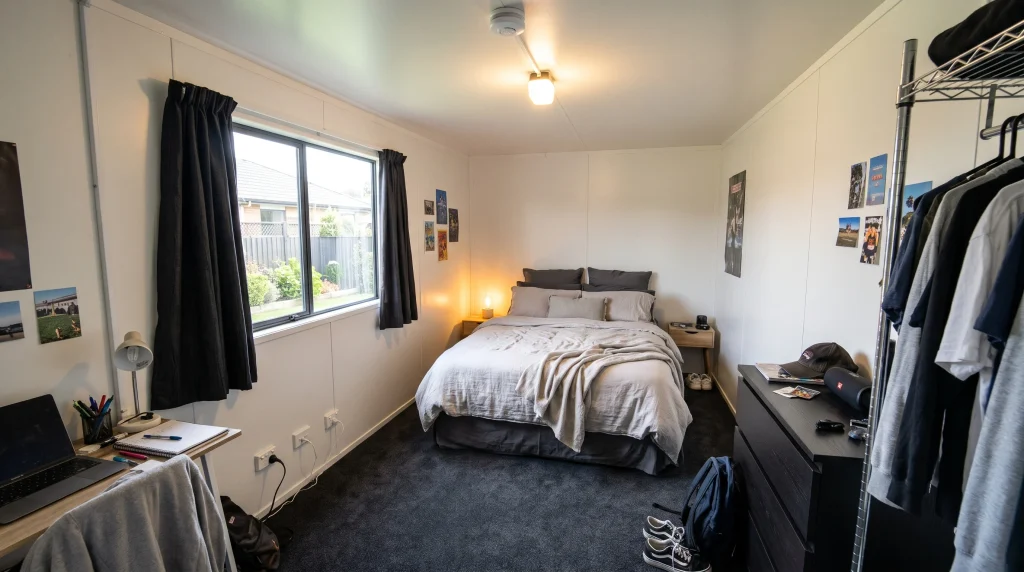
For many households it is, particularly compared with moving house or renovating. A cabin needs no building consent for most standard placements and can be delivered quickly, so you’re not paying for months of construction before you get the space. If you’re weighing a cabin against moving further away for cheaper rent, our article on affordable cabin living in 2026 runs through the wider cost comparison — this post focuses only on Work and Income help.
Ready to Get a Quote for Your Work and Income Application?
WINZ cabin hire help is real, but it works best when you arrive with the right paperwork. Start with a clear written quote, confirm where the cabin will go, then contact Work and Income to talk through the payments that fit your situation.
Room2rent delivers insulated portable cabins across the North Island and upper South Island. Find your nearest Room2rent branch for a quote you can take to your appointment, or browse the Room2rent cabin range to see which size suits your household.
Frequently Asked Questions
For housing grants such as the Accommodation Costs in Advance Grant and Arrears Grant, yes. Work and Income pays approved amounts directly to the accommodation supplier rather than to you. If the supplier isn’t already registered with Work and Income, it will be asked to complete supplier registration before the payment can go through.
It depends on the payment. The Accommodation Costs in Advance Grant and the Accommodation Costs Arrears Grant are both repayable, and Work and Income sets up a repayment plan based on your circumstances. The weekly Accommodation Supplement is not a loan and isn’t paid back, provided you’ve reported your circumstances accurately.
Yes. Work and Income states you don’t need to be on a benefit to apply for the Accommodation Costs in Advance Grant or the Arrears Grant. Your household’s weekly income and cash assets must be under the published limits, and working people can also qualify for the Accommodation Supplement depending on income.
Through the Accommodation Costs in Advance Grant, the maximum is two weeks of accommodation costs. Work and Income will also consider whether you can afford the cabin long-term and how long you’ll stay, which generally needs to be at least 28 days. Bring a quote showing the weekly hire rate clearly.
The accommodation grants focus on accommodation costs such as hire payments. Delivery or setup fees may be treated differently, so ask your case manager. Work and Income also has a separate Moving Costs Grant for some moving expenses. Ask your supplier to list delivery separately on the quote so it can be assessed properly.
Possibly. Many people place cabins on a parent’s or relative’s section. Work and Income may want confirmation that you have permission to live there, so get a signed letter from the property owner. If you also pay board or rent to the owner, mention it, as it affects how your accommodation costs are assessed.
It varies by service centre and how complete your application is. Having your quote, signed agreement, ID and income details ready usually speeds things up. For the Accommodation Supplement, payments can be backdated to your first contact if you complete the application within 20 working days.
Contact your cabin supplier early and talk to Work and Income. If you have overdue accommodation costs and risk losing the cabin, you may qualify for the Accommodation Costs Arrears Grant, which covers up to four weeks of costs and is repayable. You’ll need proof of the arrears amount from the supplier.
Students apply for the Accommodation Supplement through StudyLink rather than directly with Work and Income. Eligibility depends on student allowance status, income and costs. For one-off grants, students can contact Work and Income to check whether they meet the residency, income and asset criteria.
For the in-advance and arrears grants, Work and Income names cabin hire as an accommodation cost, so a cabin you live in is treated as your accommodation. Rules can differ for other programmes, such as public housing assessments, which treat some temporary structures differently. Ask your case manager how your arrangement will be assessed.